
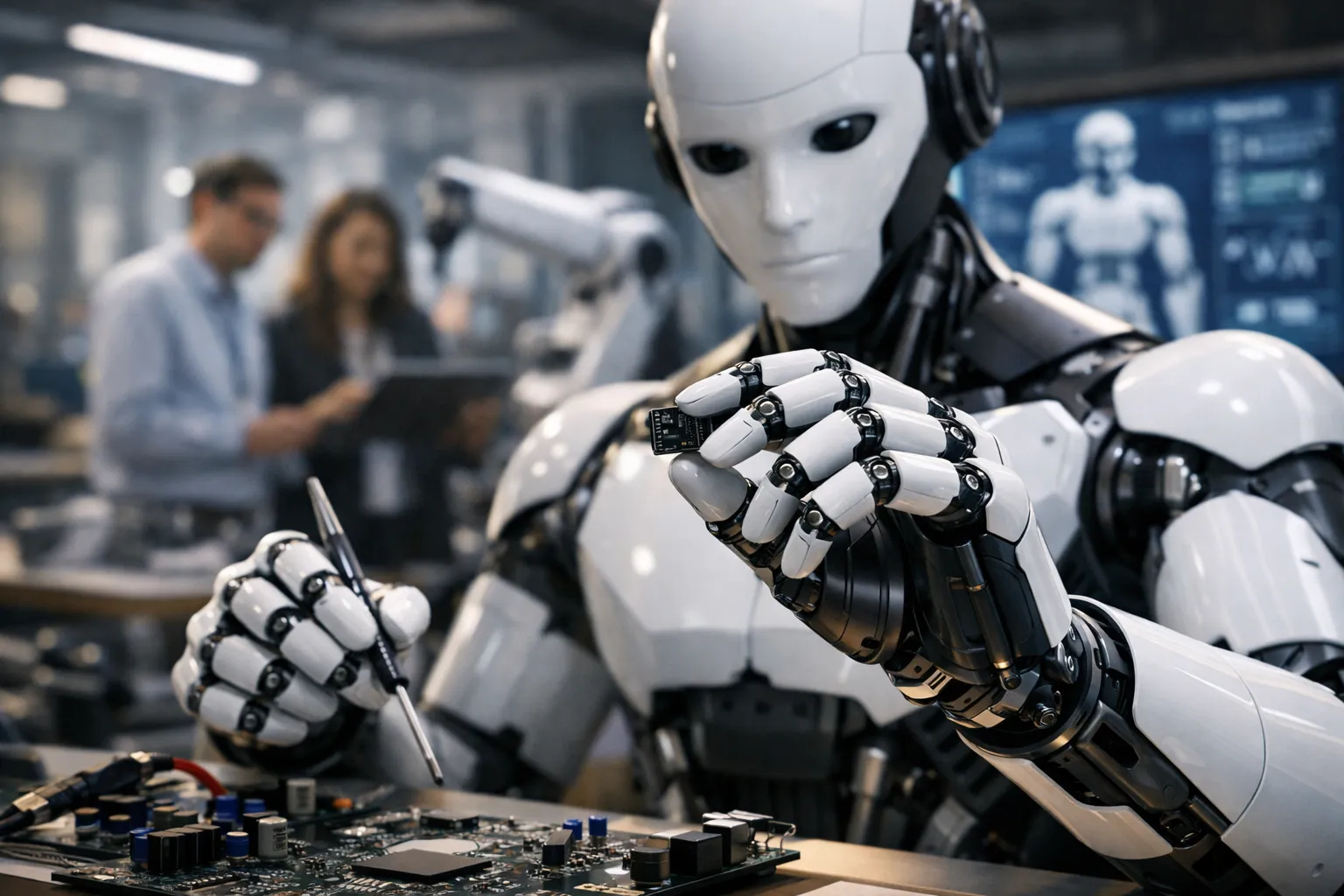
Samsung Electronics is developing a humanoid robot featuring five fingers on each hand, designed to closely mimic human hand dexterity for handling tools and performing delicate movements in environments built for humans.
Ahead of CES 2027 scheduled for January in the US, Samsung, Hyundai Motor Group, and LG Group are pursuing different strategies in humanoid robotics. Samsung established its Robotics Experience (RX) business division in July, consolidating its robot R&D and commercialization teams under direct CEO oversight. Chairperson Lee Jae-yong planned to visit the RX division at the Seoul R&D campus to observe demonstrations of the robot’s manipulation capabilities.
Samsung’s robot employs cable-driven mechanisms to move fingers similarly to human tendons, aiming to enhance precision manipulation essential for replicating human tasks. This contrasts with competitors like Boston Dynamics’ Atlas robot, which uses simplified four-finger designs to optimize industrial efficiency.
LG Electronics and Tesla also develop humanoid robots with ten fingers, with LG collaborating with Nvidia to unveil next-generation bipedal humanoids in early 2027.
Experts note that finger count alone does not determine dexterity; joint flexibility, degrees of freedom, and tactile sensing are critical factors. Samsung’s approach reflects the significance of replicating human hand function to enable robots to operate seamlessly in human environments.
CES 2027 is expected to showcase the commercial viability and functional capabilities of these humanoid robots from Korean conglomerates, potentially influencing the future landscape of robotics in manufacturing and daily life.
For further details, see the original report by Hankyoreh: Samsung bets on humanlike hands in humanoid robot race.